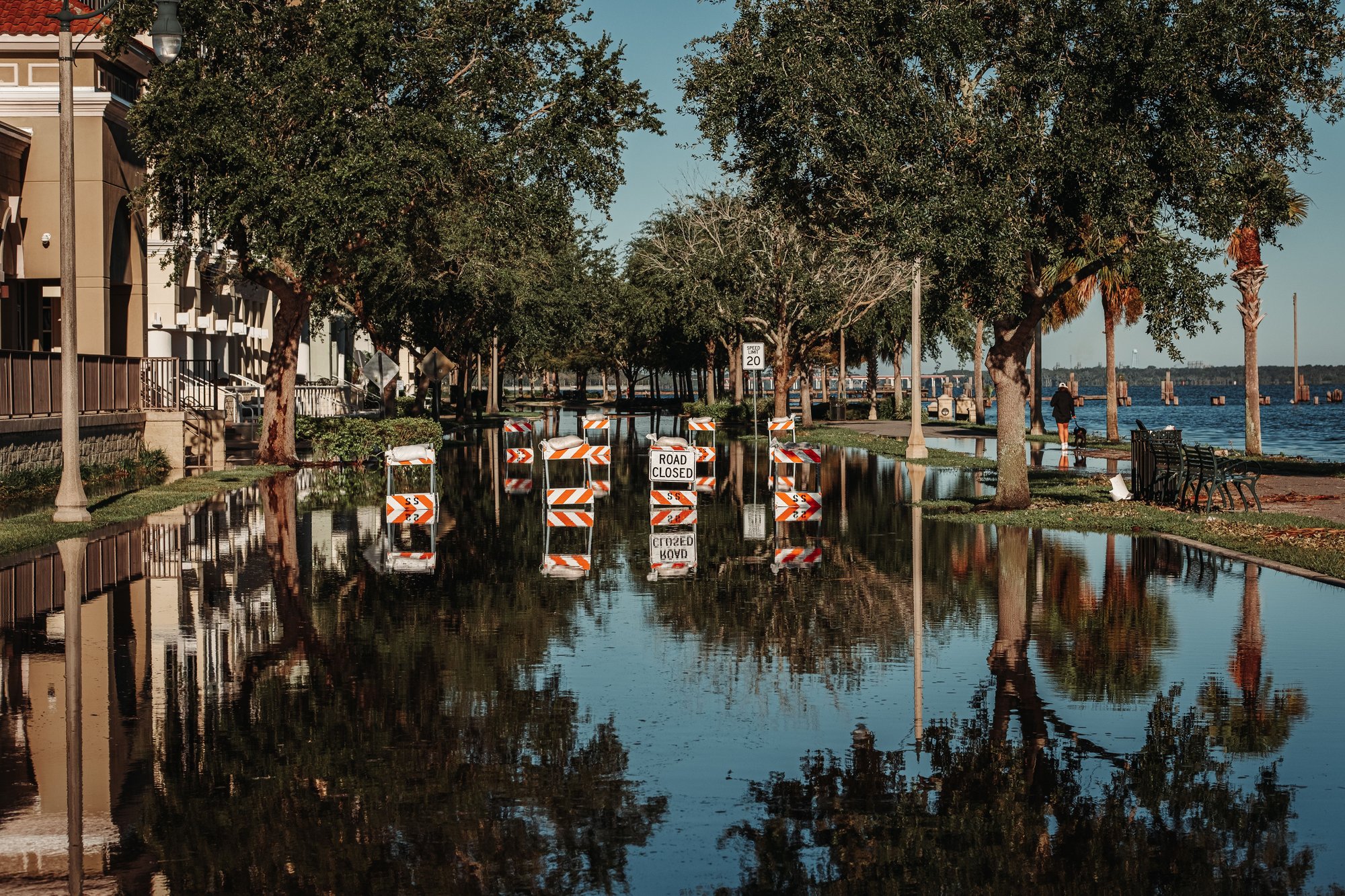
This is one of the most common questions coming up in Florida homeowner conversations right now. Threads on r/florida and r/StPetersburgFL show real confusion about who the Citizens rule actually applies to, and the same question keeps coming up in investor forums on BiggerPockets from owners of rental and second homes. We work with buyers and sellers across Ponte Vedra Beach, Nocatee, and the St. Johns County beaches every week, and lately almost every closing we touch runs into one of these two deadlines somewhere along the way.
The NFIP's December 11 deadline, and what a lapse actually does
The National Flood Insurance Program runs on short-term extensions from Congress rather than a long-term reauthorization. The current extension runs out at 11:59 p.m. on December 11, 2026, according to FEMA and the National Association of REALTORS®. If Congress doesn't act again before then, here's what actually happens:
- Existing NFIP policies stay in force through their current term, including a 30-day grace period.
- FEMA can keep paying valid claims as long as it has funding.
- FEMA cannot sell new flood policies or process renewals until Congress reauthorizes the program.
- A seller can still assign an existing NFIP policy to a buyer during a lapse, just by substituting names, so a new policy doesn't need to be issued.
- Private flood insurance is unaffected either way, and most federal lending regulators suspend the mandatory purchase requirement during a lapse, leaving the final call to your individual lender.
This isn't a hypothetical scenario. The NFIP already lapsed once in the past 14 months, from October 1 to November 12, 2025, during a federal government shutdown. If you're under contract on a home in a flood zone with a closing date near December 11, ask your lender now how they'd handle a lapse, rather than finding out at the closing table. And if you're the one buying right now, this is exactly why we tell every buyer to get a real insurance quote during pre-approval instead of waiting until you're under contract. A deadline this close is one more reason not to leave it until the last minute.
Citizens' flood insurance requirement reaches everyone on January 1, 2027
Separately from the NFIP, Florida's state-run insurer of last resort has been phasing in a mandatory flood insurance requirement since 2023. Citizens Property Insurance Corporation's own published schedule, under Florida Statute 627.715, works like this for personal residential policies that include wind coverage:
- Homes in a FEMA Special Flood Hazard Area: required since the 2023 phase-in, regardless of dwelling value.
- Homes outside a flood hazard area with Coverage A (dwelling value) of $600,000 or more: required since January 1, 2024.
- $500,000 or more: required since January 1, 2025.
- $400,000 or more: required since January 1, 2026.
- Every remaining policy, regardless of dwelling value: required starting January 1, 2027.
Condominium unit-owner policies, tenant and contents-only policies, and policies that exclude wind or hail coverage are exempt. Given the price range we work in, most of the Citizens-insured homes we see in Ponte Vedra Beach and Nocatee already cleared the $400,000 threshold back in 2024, so for a lot of our sellers this already applies. January 1, 2027 is mainly the date it catches up to everyone else, including lower-value homes outside a flood zone that had been exempt until now.
Coverage A is based on what it would cost to rebuild the home, not what it would sell for. That distinction matters here: an older or custom-built home can carry a rebuild cost well above its current market value, which means it may have crossed these thresholds years before the sale price would suggest. If you're not sure where your own policy stands, your dwelling coverage amount is printed right on your declarations page.
What this means in St. Johns County
Flood zone designations aren't static, and a parcel's zone can change between the big countywide remapping efforts FEMA runs every several years. The restudy FEMA currently has underway covers Duval, Clay, and Flagler counties, not St. Johns or Nassau, so a St. Johns County address isn't part of that particular project right now. That doesn't mean your zone is locked in forever. Smaller map revisions happen between the big restudies, and buying a flood policy before a local change takes effect can grandfather your current zone and rate. The only way to know where your specific parcel actually stands is to look it up.
A few places to check it yourself:
- FEMA's Flood Map Service Center for your parcel's current flood zone designation
- St. Johns County Property Appraiser to confirm the parcel record tied to your address
- Citizens Property Insurance Corporation's flood insurance page for the current requirement and the proof-of-coverage form
During your due diligence period, it's also worth asking your insurance agent or title company to pull an elevation certificate if a lender requires one. It's a faster way to get a definite answer for a specific property than trying to interpret a flood map on your own.
If you're buying a condo rather than a single-family home, flood insurance is only one piece of a bigger financing picture right now. The Full Review rules and rising reserve requirements that took effect this year often end up mattering just as much. And if the home in question is a second home or a rental rather than your primary residence, remember that Amendment 3's lower assessment cap applies to that property too, which is one more reason to run the full carrying-cost picture before you commit to a specific address. On the seller side, an open insurance question is exactly the kind of thing that can stall a deal once a buyer's lender starts asking about it, so if your listing has already been sitting longer than you'd like, this is worth checking before you reprice.
Our perspective
We've been licensed in this market for nine years, and insurance has become one of the first conversations we have with almost every buyer and seller, right alongside price and timing. Since January 2024, we've closed 56 homes with an average sale price of $1.28 million, much of it waterfront property where flood zone and flood insurance aren't a footnote, they're part of the deal. We'd rather you find out now whether either of these deadlines actually applies to your specific address, while there's still time to plan around it, than during underwriting the week before closing.
Sources
- Citizens Property Insurance Corporation, "Flood", official phase-in schedule and documentation requirements, accessed November 16, 2026
- FEMA, "Flood Insurance Rules and Legislation"
- National Association of REALTORS®, "FAQ: National Flood Insurance Program Expires December 11, 2026", accessed November 16, 2026
- FEMA Flood Map Service Center
- St. Johns County Property Appraiser
If you want help figuring out whether either deadline actually applies to your specific address, or what it means for a home you're considering, reach out and we'll put together a local market analysis alongside it. And if you're actively comparing homes right now, our current listings are a good place to start.